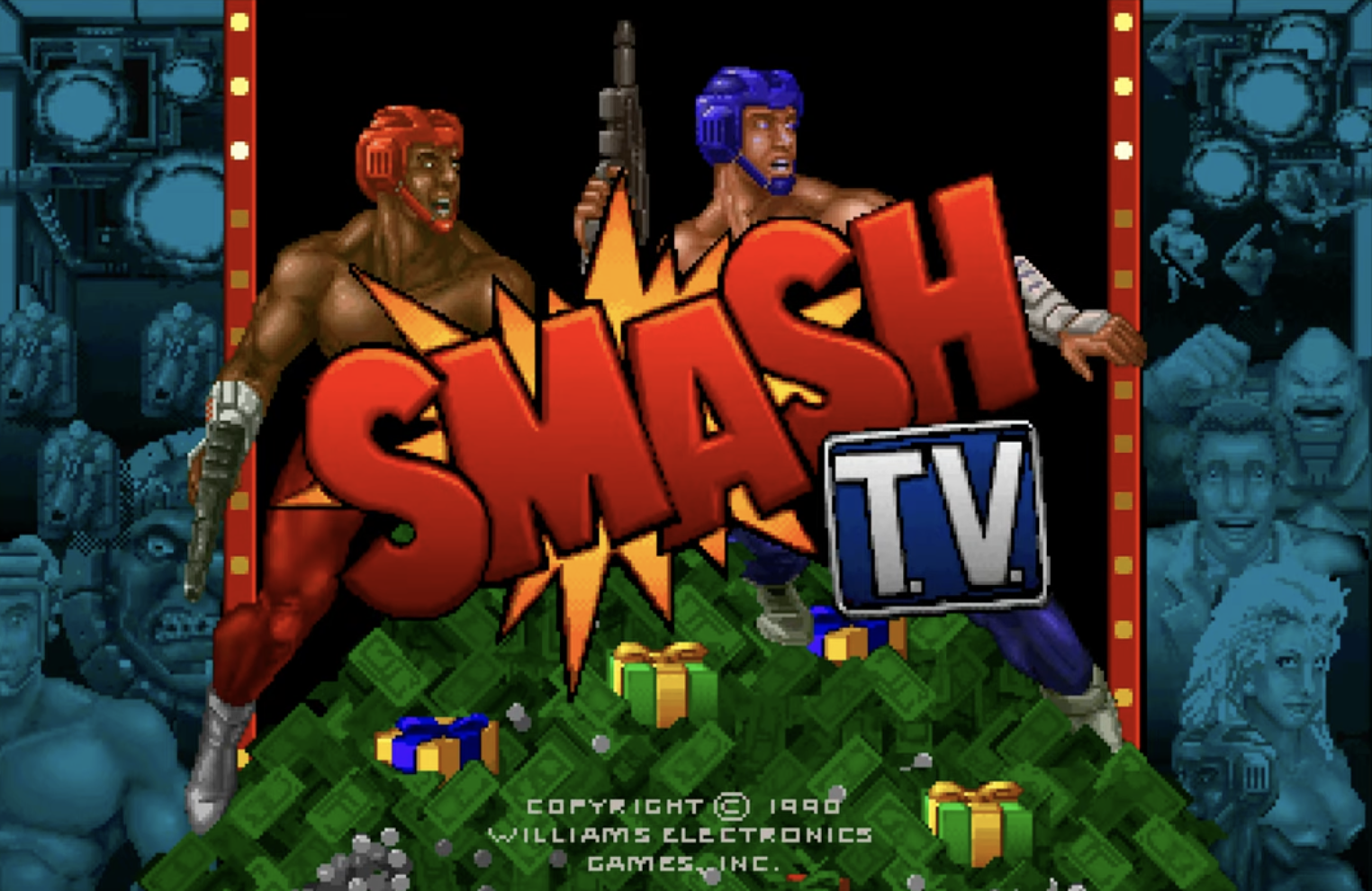
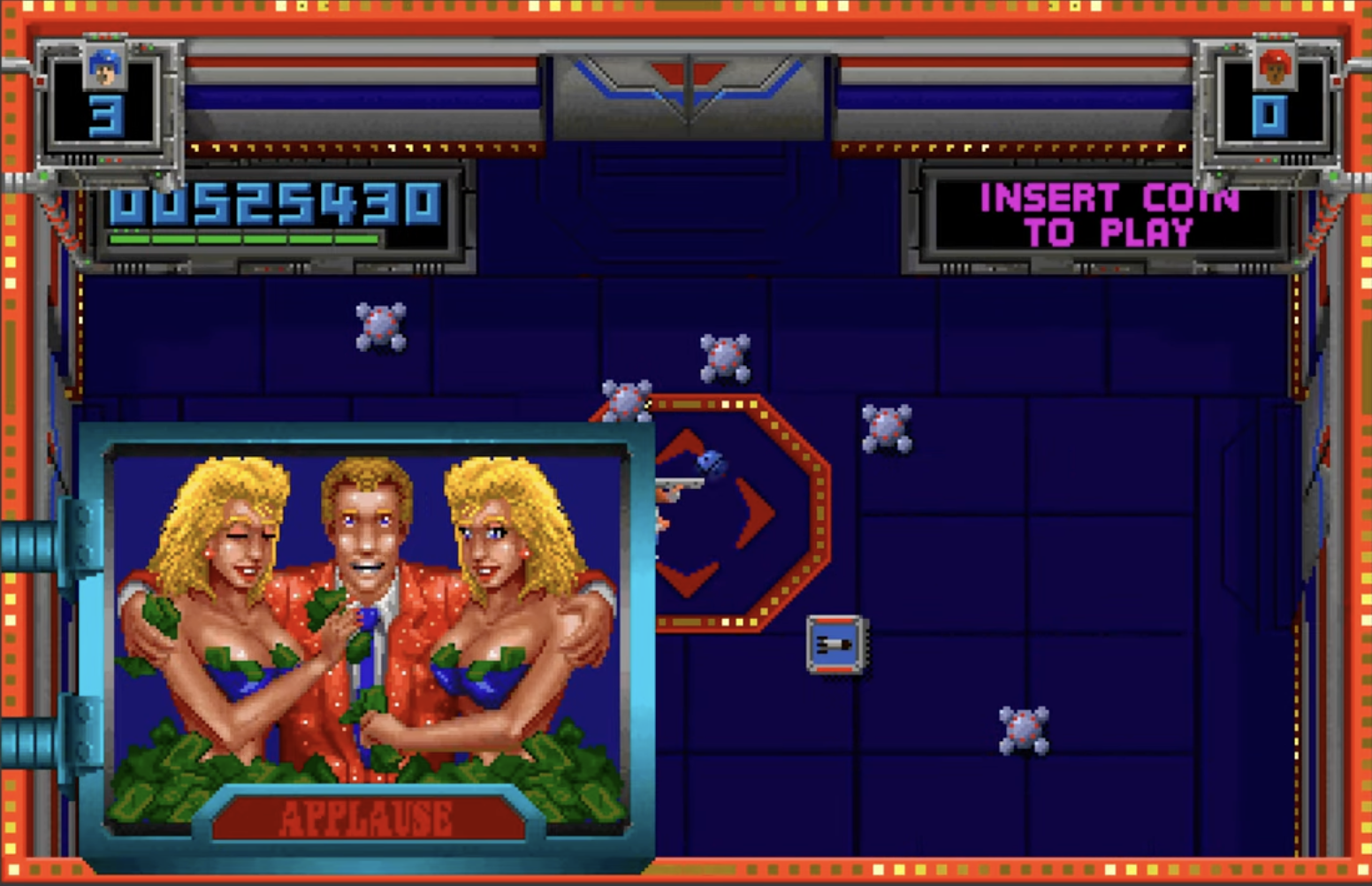
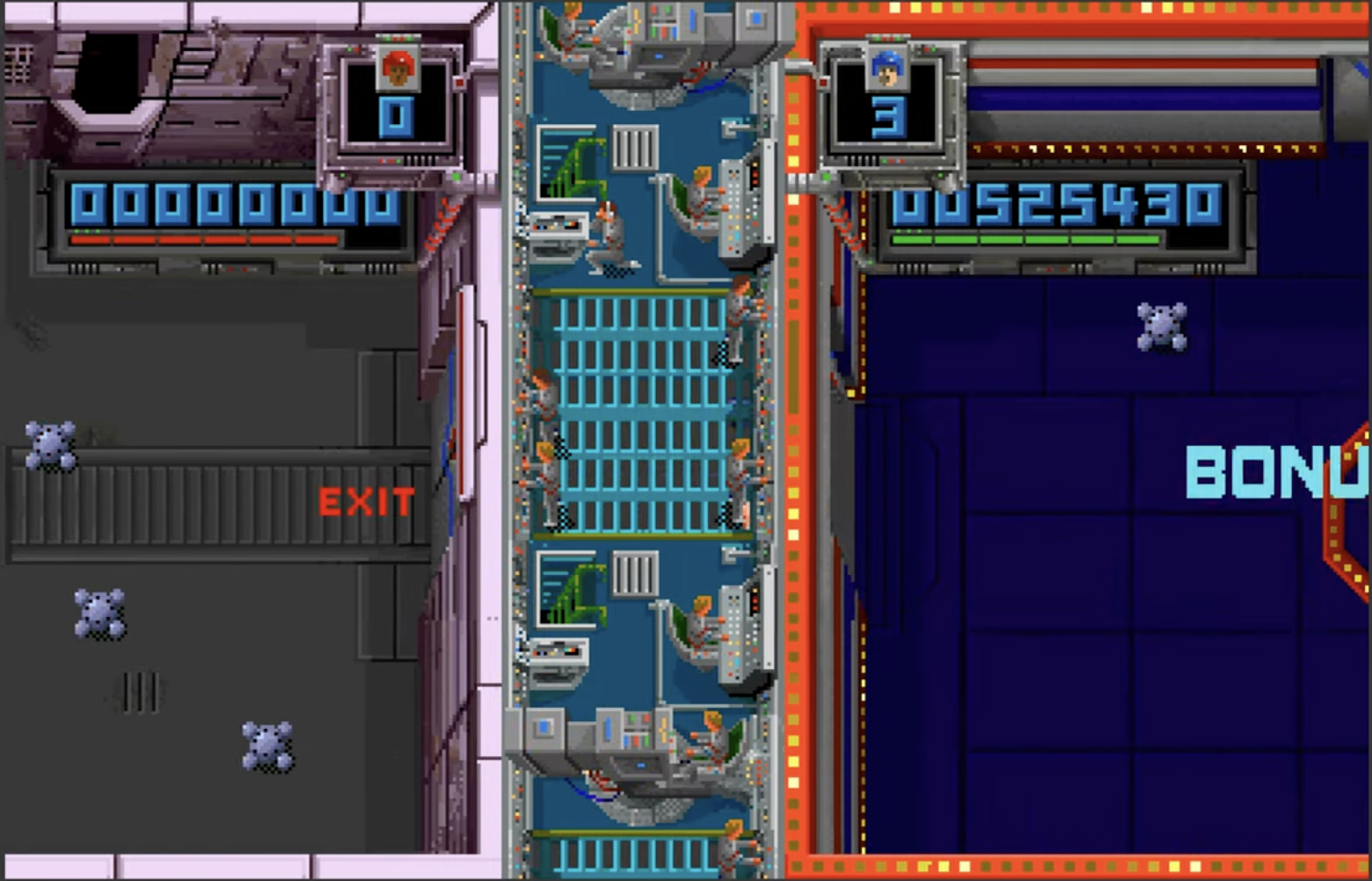
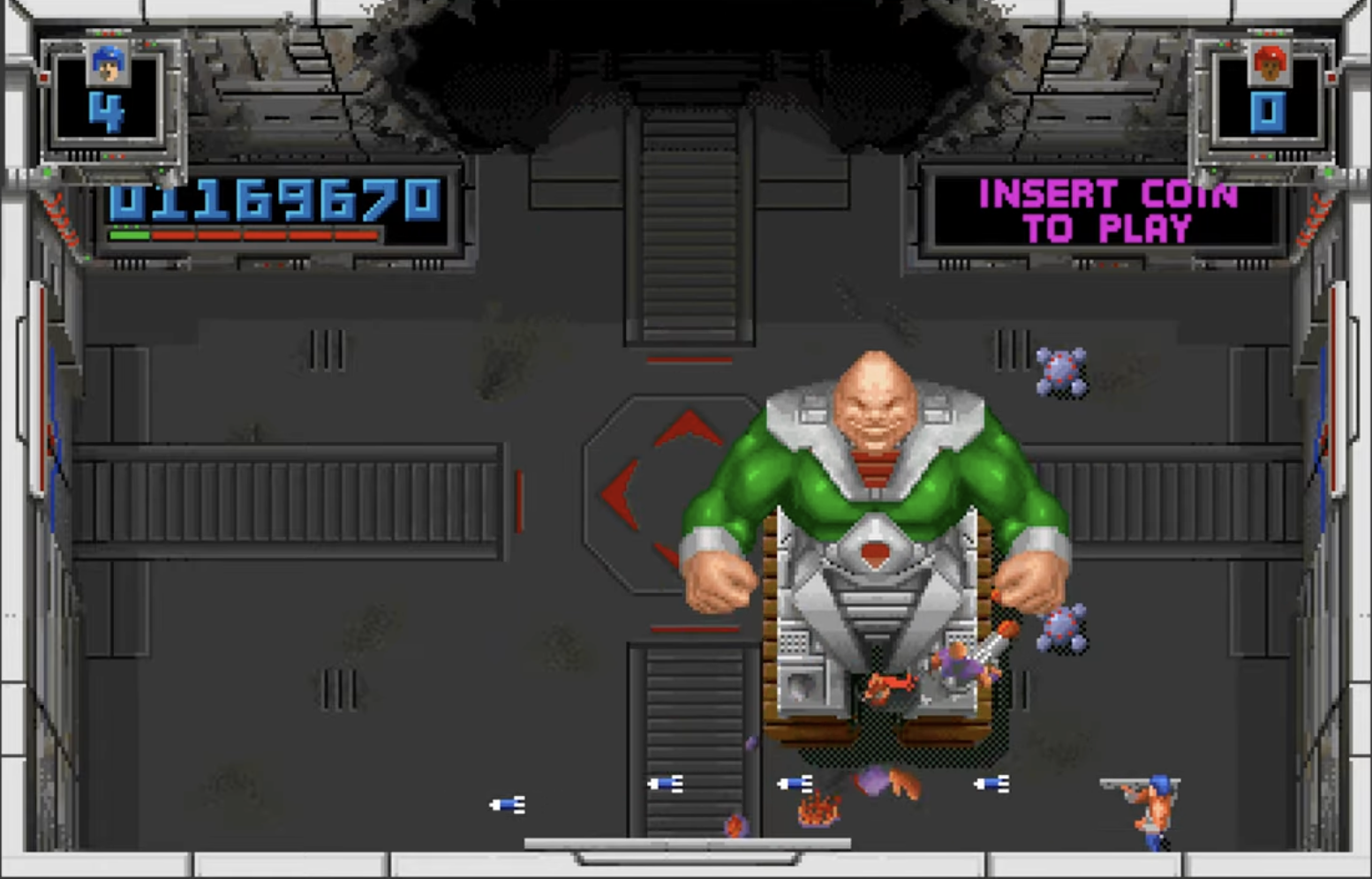
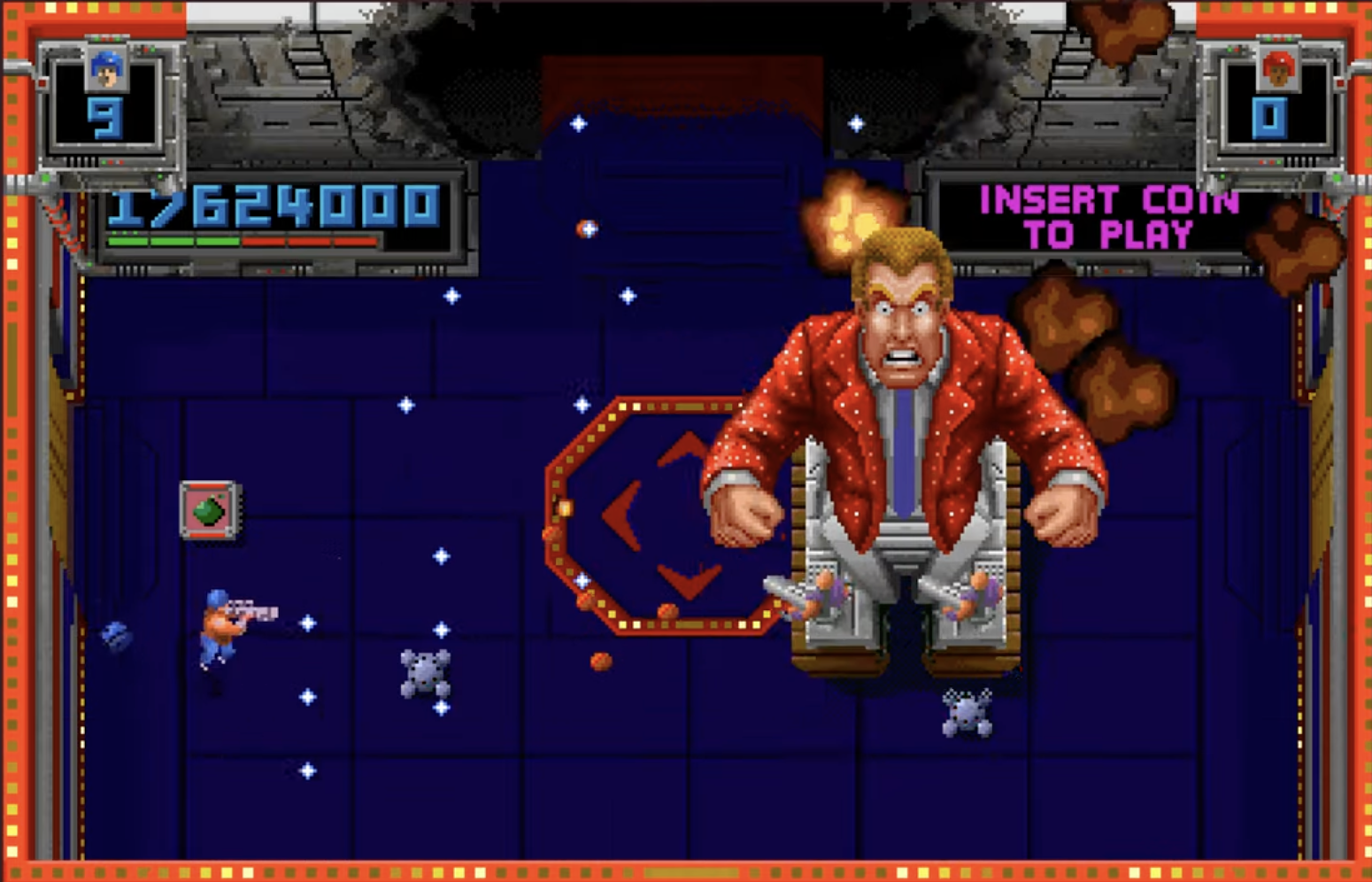
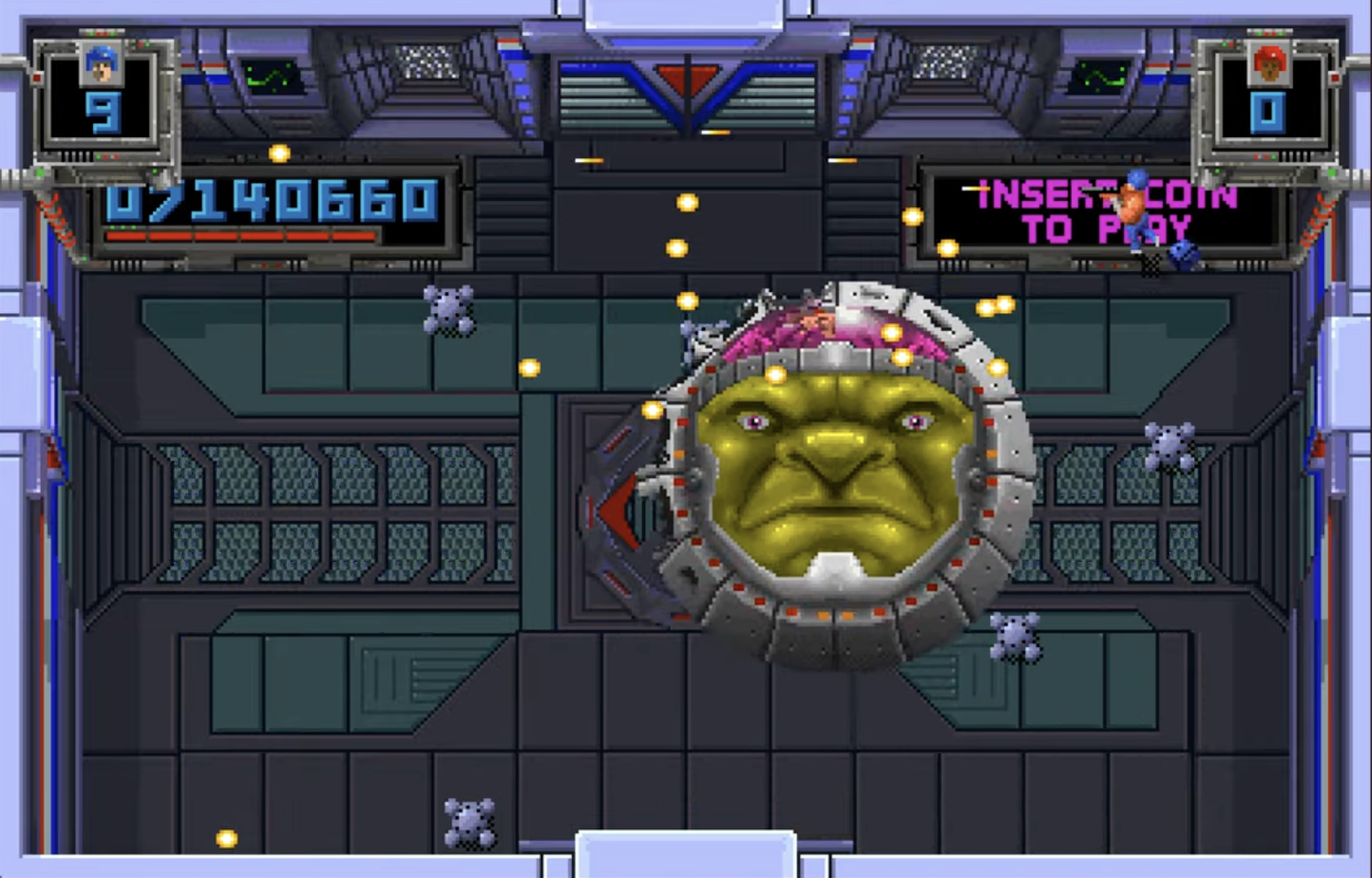
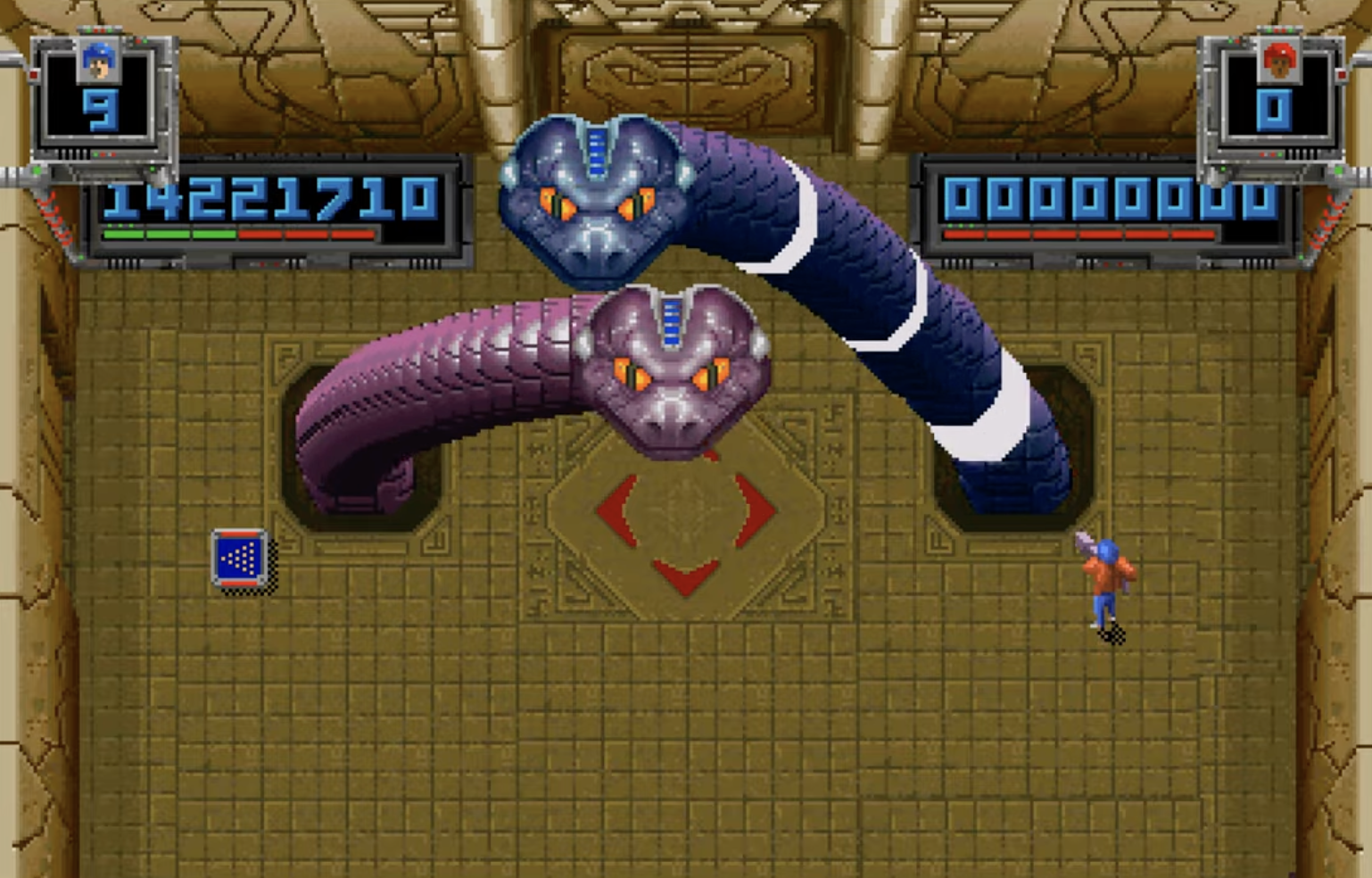
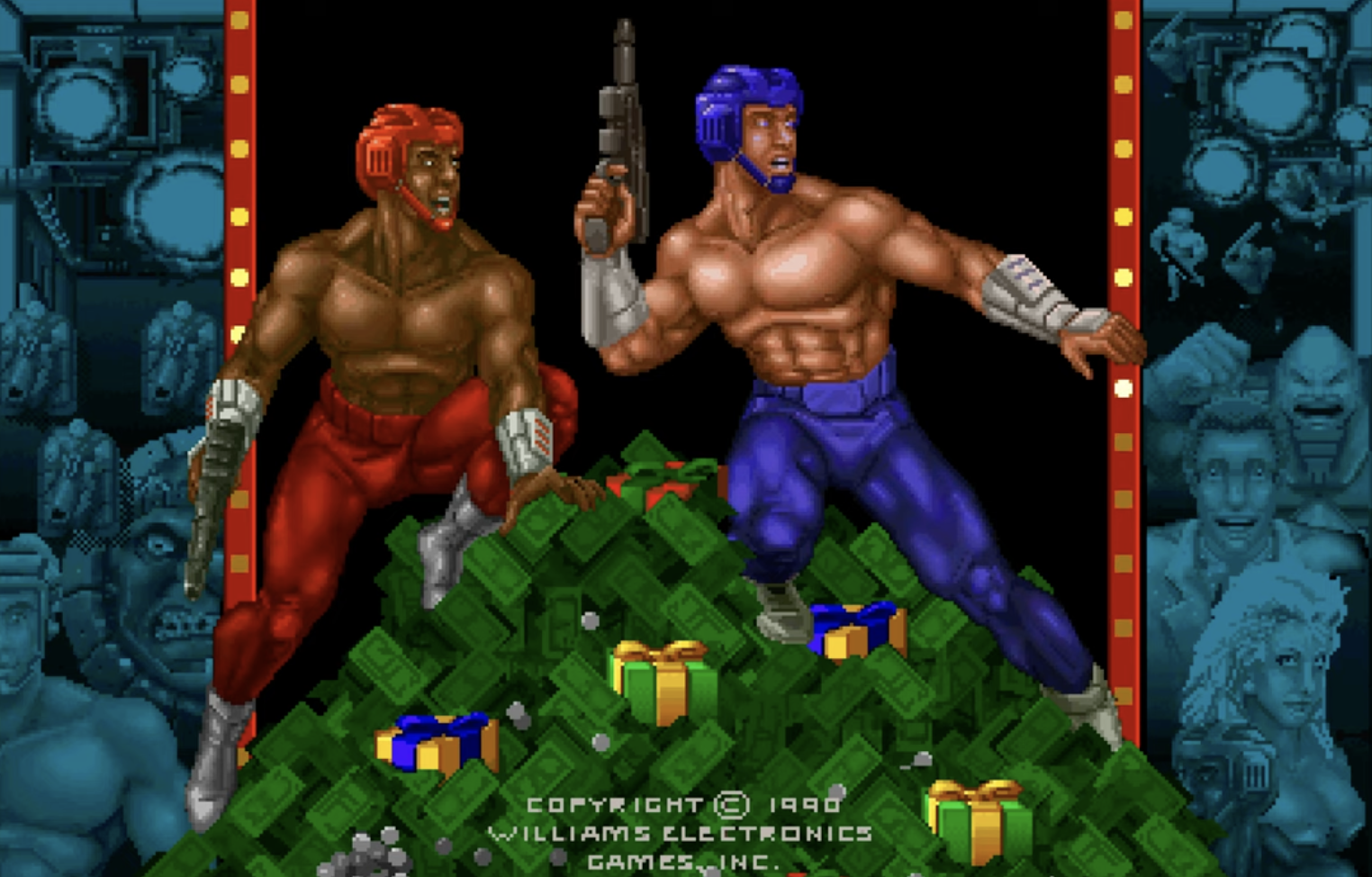
Smash TV, 1990, Williams/Acclaim“Big Money! Big Prizes!” – Why Smash TV Is Peak Violent Game Show Chaos Smash TV didn’t just walk into arcades in 1990; it crash‑landed like a dystopian game show from hell, screaming “Big money! Big prizes! I love it!” at every kid clutching a handful of quarters. Developed by Williams and designed by Eugene Jarvis and Mark Turmell, Smash TV is a twin‑stick arcade shooter that feels like someone mashed up The Running Man, RoboCop, and a mountain of late‑’80s cable TV into one neon‑soaked fever dream. It’s loud, it’s brutal, and it’s a razor‑sharp parody of media violence that also happens to be an absolute blast to play. Smash TV, 1990, Williams/AcclaimArcades, Reaganomics, and the Birth of a Bloodsoaked Game Show By 1990, arcades were deep into the era of excess. Games were faster, louder, and more aggressive, and Williams—fresh off the success of titles like Robotron: 2084 and NARC—was pushing boundaries in violence and style. Smash TV arrived in this climate as a spiritual successor to Robotron, but with a savage TV twist. Jarvis and Turmell built a game where players competed in a futuristic televised bloodsport, mowing down hordes of enemies for cash, cars, and the occasional VCR. The premise: survive wave after wave of contestants and creatures on a live TV show for the promise of fabulous prizes and, maybe, your life. It was satire wrapped in explosions, and it fit perfectly into the era’s fascination with both media excess and ultra‑violence. Smash TV, 1990, Williams/AcclaimThe Running Man: Smash TV’s DNA Is Pure Dystopian Prime Time Smash TV wears its cinematic influences on its blood‑spattered sleeve, and The Running Man (1987) is front and center. Paul Michael Glaser’s film, loosely based on Stephen King’s novel (written under the Richard Bachman pseudonym), centers on a deadly game show where convicts fight for survival on live TV. It’s set in a near‑future dictatorship where entertainment is weaponized to control the masses. Smash TV mirrors this concept almost beat for beat: a televised deathmatch, a charismatic and sinister host, contestants treated as disposable meat, and an audience that’s disturbingly into it. The over‑the‑top prizes—“Toasters! Pleasure domes!”—feel like a darkly comedic riff on the consumerist rewards promised in The Running Man, where survival is the ultimate prize but spectacle is the real product. Jarvis and Turmell have acknowledged that dystopian sci‑fi and media satire were key inspirations, and The Running Man is arguably the clearest cinematic ancestor in the game’s DNA. Smash TV, 1990, Williams/AcclaimRoboCop, Corporate Satire, and the News Break from Hell If The Running Man gave Smash TV its game show skeleton, RoboCop (1987) gave it its savage corporate attitude. Paul Verhoeven’s RoboCop is infamous for its fake commercials and news segments, mocking how corporations and TV networks turn violence into entertainment and advertising. That same tone pulses through Smash TV’s presentation. The game’s host is a grinning, suit‑clad caricature of the sleazy TV executive, and the entire premise leans into the idea that the more violent the show, the better the ratings. RoboCop’s world of Omni Consumer Products—a corporation that literally owns the police—echoes in Smash TV’s gleeful commodification of death. Everything is a prize. Everything is a product. Even your survival is just another ratings bump. The game’s exaggerated gore and absurd rewards feel like they were ripped straight out of a Verhoeven satire, where the joke is that nobody sees the joke anymore. Smash TV, 1990, Williams/AcclaimTwin Sticks, Zero Mercy: How Smash TV Plays Mechanically, Smash TV is a showcase of arcade design distilled to its purest, meanest form. The game uses a dual‑stick control scheme: one joystick to move, one to fire in eight directions, just like Robotron: 2084 before it. On an arcade cabinet, that meant two physical sticks per player, allowing you to run one way while firing in another, constantly weaving through a storm of bullets, grenades, and charging enemies. The screen fills with enemies so quickly that the game becomes a dance of micro‑dodges and reflex shots. Rooms are tight, exits are locked until you clear every enemy, and the difficulty ramps up brutally fast. Smash TV is not interested in fairness so much as intensity. It’s designed to overwhelm you, and in doing so, keeps you feeding it quarters like a contestant bribing the producers for another shot at survival. Smash TV, 1990, Williams/Acclaim“Big Money! Big Prizes!” – The Host as Your Best Worst Friend One of Smash TV’s secret weapons is its host, a grinning, slick-haired TV personality who sounds like he’s been mainlining late‑night infomercials. Between rounds, he pops up with lines like “Big money! Big prizes! I love it!” and “I’d buy that for a dollar!”—the latter a direct quote from RoboCop’s in‑universe sleaze show, neatly tying the inspiration loop together. His exaggerated enthusiasm for your carnage is the game’s dark comedic core. He never acknowledges the horror of what’s happening; to him, you’re just ratings and ad revenue. This host isn’t just flavor text; he’s the embodiment of the game’s critique of media. He represents the TV industry’s willingness to turn anything—pain, death, desperation—into entertainment, as long as the numbers look good. And because this is an arcade game, you’re complicit: the more you play, the longer you keep the show on the air. Smash TV, 1990, Williams/AcclaimPrizes, Consumerism, and the Joke That’s a Little Too Real Smash TV’s prize system is where its satire really sharpens. As you blast through waves of enemies, you collect cash, gold bars, keys, TVs, and other “fabulous” rewards that pop out like piñata guts. The prizes are intentionally mundane—a brand new VCR!—or absurdly indulgent, like “Pleasure Domes,” a reference to the game’s secret bonus area. This overabundance of stuff echoes the consumerist excess of the late ’80s and early ’90s, as well as the prize‑obsessed culture of game shows like The Price Is Right. In The Running Man, contestants are promised pardons and tropical vacations; in Smash TV, your reward is a pile of consumer goods that feel both meaningless and irresistible. The joke is that you’re risking your life for junk, and yet the thrill of grabbing every last dollar sign and prize icon is so satisfying that it mirrors the same mindless acquisition the game is mocking. Smash TV, 1990, Williams/AcclaimBosses, Blood, and the Art of Arcade Excess Smash TV doesn’t just throw basic enemies at you; it escalates into boss fights that feel like they crawled out of an R‑rated Saturday morning cartoon. You’ll face Mutoid Man, a giant cyborg torso mounted on tank treads, blasting lasers and missiles while chunks of his body explode off under sustained fire. There’s Scarface, a monstrous wall of flesh and guns, and Cobra, a serpent‑like boss that coils around the arena. These designs lean heavily into the body‑horror‑meets‑sci‑fi aesthetic popularized by RoboCop and other late‑’80s genre films. The gore is stylized but unmistakable—enemies explode into showers of meat and metal, and the bosses disintegrate in spectacular fashion. It’s not realistic, but it’s intentionally extreme, and that extremity is part of the game’s commentary: violence is turned up so high it becomes absurd, echoing RoboCop’s and The Running Man’s approach to satire through excess. Smash TV, 1990, Williams/AcclaimCo-op Chaos: Friendship, Ruined by a Pile of Cash Smash TV is brutally difficult solo, but it truly shines as a two‑player co‑op experience. Two players share the same screen, weaving around each other’s fire, competing for the same prizes, and desperately trying not to get each other killed. The game tracks who grabs more cash and prizes, quietly turning cooperation into competition. That tension—are we teammates or rivals?—echoes the game’s TV‑show theme, where alliances are fragile and everyone’s ultimately out for themselves. In the arcades, this made Smash TV a social event: strangers teaming up, yelling directions, and then immediately diving for the same pile of loot. It’s the kind of chaotic energy that modern couch co‑op games still chase, and it’s a big reason the game stuck in players’ memories long after the arcade cabinets disappeared. Ports, Legacy, and the Road to Modern Twin-Stick Shooters Smash TV’s popularity led to a wave of ports in the early ’90s, hitting platforms like the NES, SNES, Sega Genesis, and home computers. Most of these versions had to compromise on graphics or controls—twin‑stick shooting on a gamepad with limited buttons was a whole design puzzle—but the core chaos survived. The SNES version, for example, used the face buttons to simulate directional shooting, a clever workaround that would influence how later console shooters handled 360‑degree fire. Smash TV’s influence can be seen in modern twin‑stick shooters and roguelites, from Geometry Wars to The Binding of Isaac and Enter the Gungeon. The idea of a player locked in an arena, constantly moving and shooting in different directions, is now a genre staple. Smash TV didn’t invent twin‑stick shooting—that honor belongs more directly to Robotron—but it popularized the televised bloodsport spin that made the formula unforgettable. A Time Capsule of Media Paranoia That Still Hits Hard What makes Smash TV fascinating today isn’t just that it’s a tight, punishing action game; it’s that its satire feels disturbingly relevant. The Running Man imagined a future where reality TV and state violence merged into prime‑time entertainment. RoboCop skewered corporate greed and the way media numbs us to brutality. Smash TV takes those ideas and turns them into an interactive joke that you participate in. You’re not just watching the show—you’re starring in it. In a world now saturated with reality TV, live‑streamed everything, and endless content algorithms, the idea of violence as entertainment doesn’t feel like sci‑fi anymore; it feels like a Tuesday scroll. Smash TV is a relic of the arcade era, but its themes still hit like a shotgun blast: we’ll watch anything, cheer for anything, and buy anything, as long as it’s entertaining enough. Smash TV, 1990, Williams/AcclaimSmash TV’s Lasting Appeal: Big Money, Big Nostalgia Three decades later, Smash TV still rules because it understands something fundamental about games and media: spectacle sells, but style sticks. Its controls are sharp, its difficulty unforgiving, and its aesthetic—a chaotic collision of game show glitz and sci‑fi ultraviolence—remains iconic. The Running Man and RoboCop gave it a blueprint for dystopian satire, and Williams’ arcade sensibilities turned that blueprint into a playable riot. Whether you’re revisiting it via compilations like Midway Arcade Treasures or watching speedruns on modern platforms, Smash TV is more than just a retro curiosity. It’s a loud, bloody, very funny mirror held up to our obsession with entertainment at any cost. Big money. Big prizes. Big commentary. And for players who grew up in front of glowing CRTs, it’s also big nostalgia—worth every quarter you fed it, and then some.
 Revisiting Smash TV