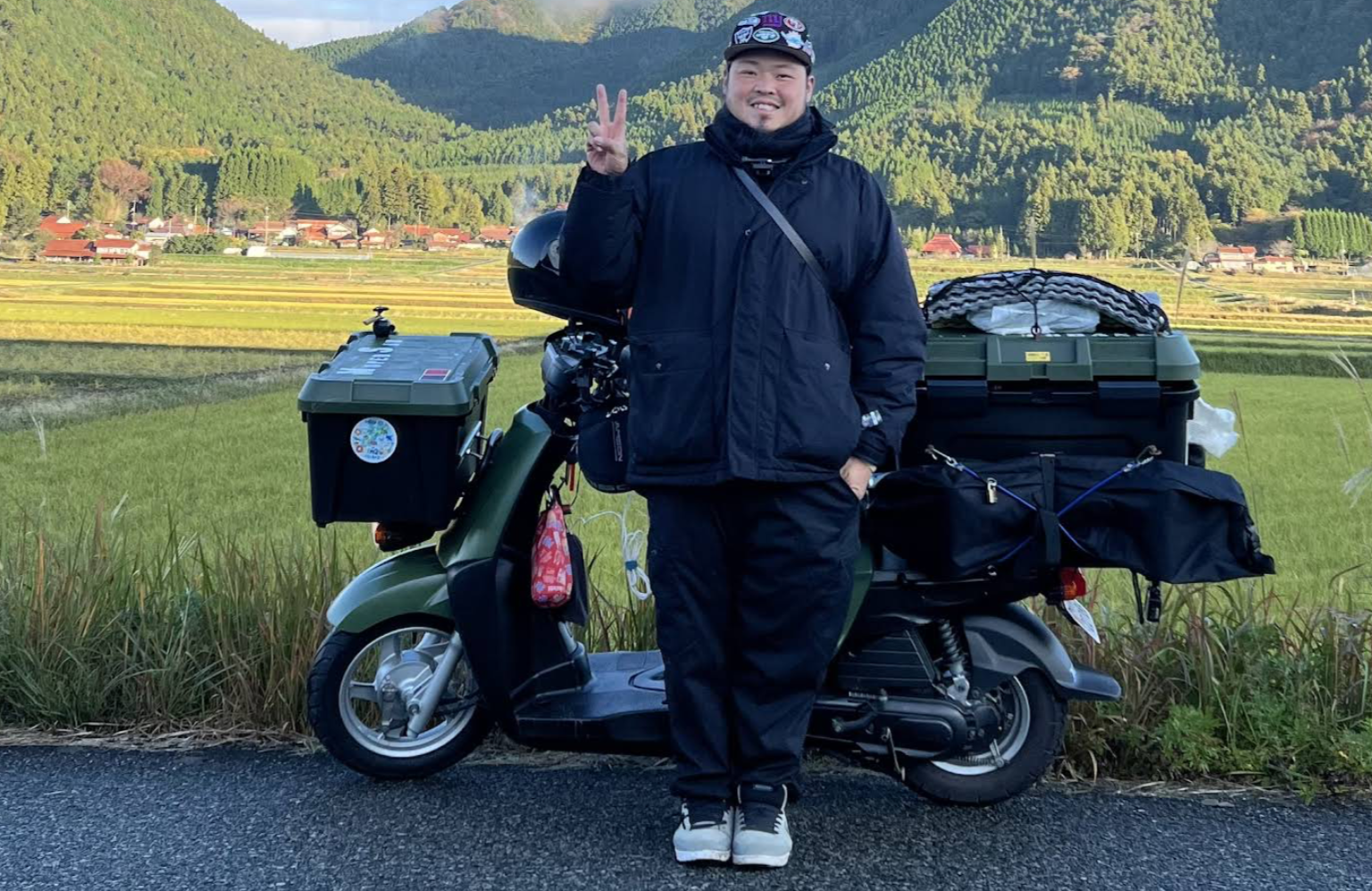
The Rise of NomadPush: From Sidewalks to Subscribers If the name NomadPush hasn’t hit your algorithm yet, consider looking into this channel. At the center of it all is Robin-san, a skater-turned-wanderer who first rolled across Japan with little more than a board, a backpack, and a camera. He documented a life that most of us only romanticize in late-night group chats: sleeping wherever he could, stretching every last yen, and chasing views not for clout, but for survival. Over time, that scrappy, unfiltered nomadic existence evolved into a full-blown channel and a devoted fanbase that now funds his current chapter—living out of a van, drifting from town to town, turning the margins of society into the main storyline. What makes him stand out in a sea of “van life” influencers is that his journey didn’t start with a trust fund and a custom Sprinter; it started with homelessness, hustle, and a willingness to show the unglamorous parts. Today, he’s one of the most genuinely inspirational creators on the platform, and these five videos are a masterclass in why his story hits so hard.1. How $11 Internet Cafes Are Changing Life for Japan’s Homeless One of NomadPush’s breakout hits—now sitting at around 2 million views—dives into a uniquely Japanese phenomenon: the internet café as emergency housing. In this video, Robin-san walks viewers into the world of “net café refugees,” people who can’t afford conventional apartments and instead rent tiny booths by the night. For the equivalent of about $11, he secures a private cubicle equipped with a reclining chair or thin mattress, a computer, and just enough space to stretch out. He breaks down the economics of survival with a kind of calm precision: how a few days of gig work or YouTube revenue can translate into several nights of shelter, Wi-Fi, and relative safety. It’s not romanticized—this is poverty, plain and simple—but he frames it with a survivor’s pragmatism rather than self-pity.
Beyond the price tag, the video doubles as a cultural tour. Robin-san shows off the perks that make these cafés a lifeline: unlimited soft drinks, endless shelves of manga and anime, and the ability to order hot food straight to your booth. For a slightly higher fee, he demonstrates how you can do laundry on-site, take a proper shower, and reset your body after days on the street or in a tent. The camera lingers on the small comforts: a steaming bowl of instant curry, the hum of vending machines, the glow of computer screens in the dark. As he talks through his strategy—how he hustles just enough income to string together a few nights indoors—you see how ingenuity and resilience can turn even a cramped internet booth into a temporary sanctuary. The video doesn’t just review a space; it documents a survival system that mainstream travel vlogs rarely acknowledge.2. “I Am 38 Years Old Japanese Homeless. I Am Lonely but Good Food.” In one of his most emotionally revealing uploads, which has drawn over a million views, Robin-san leans into a title that’s both blunt and disarming: “I am 38 years old Japanese Homeless. I am lonely but good food.” The video walks a tightrope between two wildly popular YouTube genres—mukbang and lifestyle vlogging—but filters both through the lens of homelessness. He sets up in a modest spot, sometimes outside, sometimes in a budget-friendly space, and lays out an assortment of inexpensive, ready-to-eat meals: convenience store bentos, onigiri, fried chicken, instant noodles. As he eats, he doesn’t just review the flavors; he turns each bite into a conversation about survival, gratitude, and the strange intimacy of sharing a meal with strangers on the internet.
What makes this video particularly compelling is his humility. There’s no manufactured drama, no clickbait meltdown—just a man candidly admitting that he’s lonely, that life has been hard, and that good food, even cheap food, can feel like a small celebration. Between mouthfuls, he talks about his dreams of becoming a successful YouTuber, not as a fantasy, but as a concrete plan to escape the precariousness of his current life. He shares stories of the jobs he’s tried, the nights he’s spent outside, and the quiet hope that each video might be the one that pushes him closer to stability. The contrast between the simplicity of the meal and the weight of his words hits you: this isn’t just content; it’s a personal diary with calories. Viewers don’t just watch him eat—they witness a man using the internet as both a lifeline and a confession booth.3. How Police in Japan Treat Homeless People In another standout video, currently hovering above 700,000 views, Robin-san tackles a topic that could easily veer into confrontation: how law enforcement in Japan treats people living on the streets. The setup is simple but tense—he’s camping out in a public area, trying to secure a safe place to sleep, when local police officers approach. The title might prime you for a clash, especially if you’re used to viral clips of aggressive policing, but what unfolds is something far more nuanced and quietly surprising. The officers don’t immediately demand that he move along or treat him like a problem to be removed. Instead, they ask questions: where he’s from, what he’s doing, whether he’s okay.
The video becomes a real-time study in cultural dynamics. The officers remain polite, almost gentle, as they assess the situation. Robin-san, for his part, is respectful and transparent, explaining that he’s simply looking for a safe spot to sleep and documenting his life as a YouTuber. Rather than escalating, the encounter settles into something almost collaborative: the police confirm that he isn’t causing trouble and ultimately allow him to stay, effectively granting him a small pocket of safety for the night. In his narration, he doesn’t paint the police as heroes or villains; he just shows the interaction as it is, letting viewers draw their own conclusions. What stands out is the humanity on both sides. For people who only know Japan through glossy tourism videos or anime, this clip offers a rare, grounded look at how institutions interact with those living at the edge of society—and how respect, even in brief encounters, can make a difference in a homeless person’s night.4. A Homeless Night in Japan’s $17 Capsule Hotel Japan’s capsule hotels have long been a fascination for global travelers—tiny pods stacked like futuristic bunk beds, rented by the night to exhausted salarymen and curious tourists. For Robin-san, though, they’re not a novelty; they’re a temporary upgrade from the street. In this video, he checks into a capsule hotel that costs the equivalent of about $17 a night, continuing one of his channel’s signature themes: reviewing budget-friendly shelters through the eyes of someone who doesn’t have a permanent home. He walks viewers through the experience in meticulous detail, from the check-in process to the locker where he stashes his few possessions, to the narrow capsule that becomes his bedroom for the night.
The camera lingers on the textures of the space: the soft glow of the capsule light, the crispness of the sheets, the low hum of other guests breathing and snoring in adjacent pods. He talks about the sense of safety that comes with four walls—even if they’re barely wider than his shoulders—and the psychological relief of knowing he won’t be woken by rain, cold, or strangers. He points out the amenities that matter most when you’re living day-to-day: clean showers, a quiet place to sleep, maybe a communal lounge where he can edit videos or charge his equipment. Throughout, he keeps circling back to the math: how a place like this is just within reach if he budgets carefully, how each night indoors is both a comfort and an investment in his ability to keep creating content. There’s an intimacy to the way he films, almost as if he’s inviting viewers to crawl into the capsule with him and feel what it’s like to turn a pod designed for layovers into a temporary home. It’s travel content, but stripped of luxury and filtered through raw, lived reality.5. I Rented a Camping Truck to See If I Can Live in One If there’s a video that feels like a turning point in the NomadPush saga, it’s the one where Robin-san rents a camping truck to test-drive his dream: living full-time in a vehicle of his own. With over 300,000 views and climbing, this episode plays like a pilot for the next season of his life. From the moment he steps into the compact caravan, there’s a visible shift in his energy—he’s not just reviewing a space; he’s auditioning a future. He explores every inch of the truck with the curiosity of someone who has slept in tents, internet cafés, and capsules, and understands exactly what makes a space truly livable: storage for his gear, a comfortable sleeping area, a small kitchen setup, and the ability to park in places that feel safe.
As he moves through the vehicle, he reflects on the long road that brought him here: the nights on the street, the grind of building a channel from scratch, the viewers who stuck around long enough to make this rental possible. There’s a contagious joy in how he tests out the bed, imagines where he’d edit his videos, and pictures waking up to different landscapes across Japan. It’s not just about mobility; it’s about dignity—the idea of having a self-contained space that’s truly his, even if it’s on wheels. He talks openly about his financial goals, about wanting to save enough from YouTube revenue to buy a van or camping truck outright, and about how this lifestyle would allow him to keep roaming without constantly worrying about where he’ll sleep next. The video ends up feeling less like a review and more like a manifesto: proof that his journey is evolving from pure survival into something that resembles stability, all while staying true to his nomadic roots. Through it all, he circles back to his audience, thanking them directly and reminding them that every view, every comment, every subscription isn’t just a metric—it’s a brick in the foundation of the life he’s trying to build.
 Youtuber NomadPush Top Five Videos